
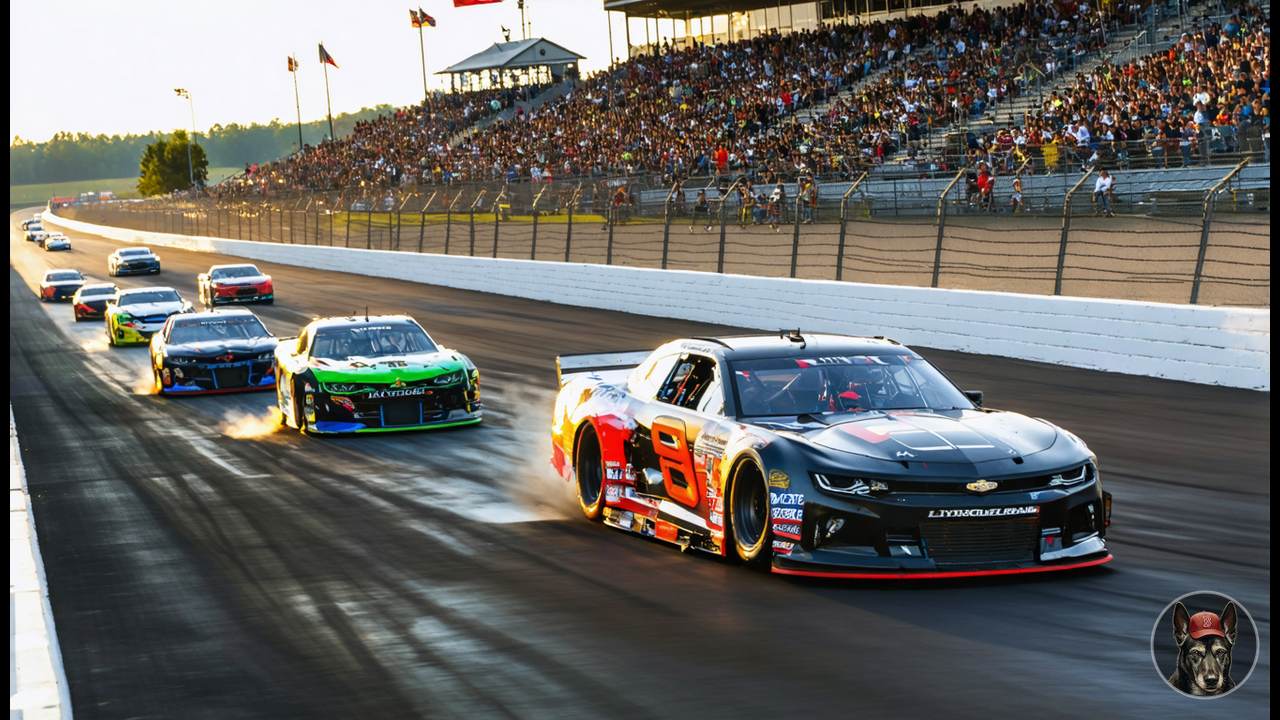
The Setup Challenge at Loudon’s Flat 1.058-Mile D-Shaped Oval
New Hampshire Motor Speedway presents one of NASCAR’s most demanding technical puzzles. The flat 1.058-mile D-shaped layout with its tight 12-degree banking forces teams into a precarious balancing act between aerodynamic efficiency and mechanical grip. Unlike high-banked speedways where downforce dominates, Loudon demands cars that can generate lateral grip through suspension geometry while managing tire wear across a grueling race distance.
The short-track nature means following is exceptionally difficult—track position becomes currency. Teams must decide whether to prioritize qualifying speed (which delivers pole position advantage) or race-trim stability that degrades less over a fuel run. This weekend, expect teams to lean aggressive on front wing angles and softer suspension settings, accepting understeer risks for mid-corner bite through the tight, technical racing groove.
Last Year’s Podium Blueprint vs. Current Market Pricing
Ryan Blaney’s dominant 2024 victory at Loudon established him as the clear class of the field, and the betting market has properly installed him as the heavy favorite at +425. His combination of car control through high-speed corners and late-race consistency in tire management proved decisive. However, the market appears to be potentially overweighting his repeat dominance—Loudon’s tight margins mean superior pit crew execution and subtle setup innovations can neutralize even championship-caliber drivers.
Josh Berry’s second-place finish last year now sits at a concerning +1200, representing massive value consideration. Berry demonstrated the racecraft and car sensitivity to keep pace with Blaney in identical equipment conditions. His current price reflects broader 2025 performance questions, but at New Hampshire specifically—a track where he’s proven competitive—this represents live money inefficiency.
William Byron rounded out last year’s top three but trades at +2200, suggesting the market has forgotten his Loudon competitiveness. Byron’s team excels at Loudon’s technical demands, yet pricing suggests Vegas anticipates Hendrick Motorsports struggles this week.
The Favorite Triumvirate: Technical Breakdown
Ryan Blaney (+425): The defending winner carries legitimate credentials. His 2025 performance wasn’t lucky—it reflected superior setup execution and tire management through the crucial final laps. However, at +425, bettors are paying a premium for recency bias. Loudon’s unpredictability and tight margins mean even the best cars finish fifth.
Christopher Bell (+450): Priced virtually identical to Blaney despite no Loudon victory, Bell represents the market’s hedge play. His Toyota equipment provides tire compound advantages that matter on flat speedways where temperature management is critical. Bell’s consistency across short-track environments makes this a fair line, though not particularly sharp in either direction.
Joey Logano (+550): Sitting fourth last year but trading at +550 represents intriguing mid-tier value. Logano’s Penske equipment has historically shown strength at Loudon through superior aerodynamic package tuning. His current odds may underestimate how close he was to the podium in last year’s race—a small setup adjustment could shuffle him into contention.
The Sharp Value Pick: Josh Berry at +1200
Berry finished second last year in identical Joe Gibbs Racing equipment, yet the market prices him at nearly triple Blaney’s odds. This pricing disconnect screams opportunity. Berry’s Loudon competence is documented, his late-race tire management rivals the favorites, and his recent 2025 performance trajectory suggests he’s found consistency. At +1200, bettors receive 12-to-1 returns on a driver who finished on the podium at this exact track twelve months ago in the same equipment category.
The key leverage: Berry’s price reflects general market uncertainty about his season, not Loudon-specific weakness. Sophisticated bettors targeting track-specific value should heavily consider Josh Berry as a contrarian play with legitimate historical backing.
Tier-Two Value Consideration: Chase Elliott at +2000
Elliott’s fifth-place finish last year combined with current +2000 pricing creates secondary value. While not as sharp as Berry, Elliott’s Chevrolet package historically performs well on flat ovals where mechanical grip reigns supreme over aerodynamics.